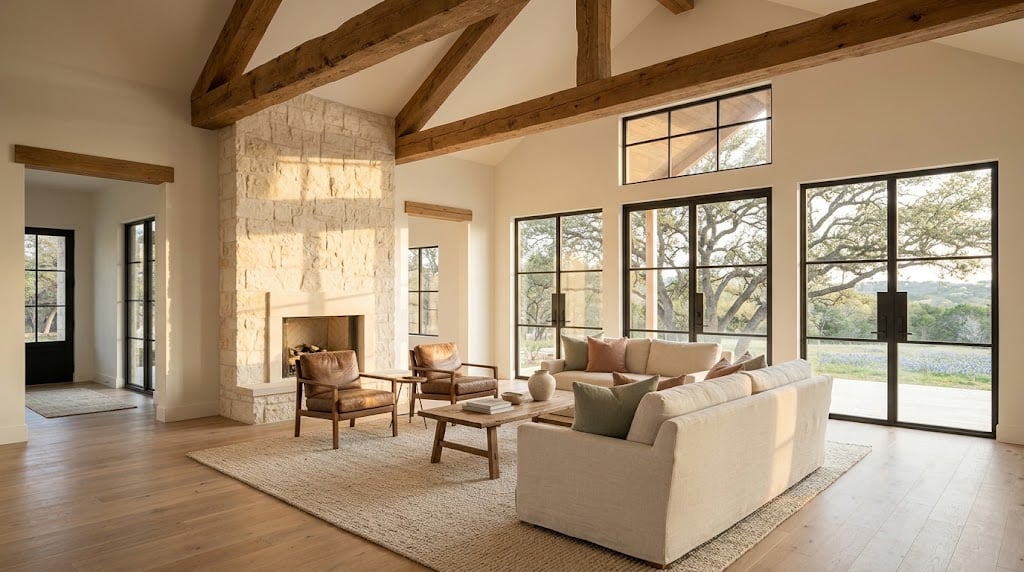
A vacant home in Boerne or Fair Oaks Ranch looks like a blank page on a listing site. Empty rooms shrink in photos, and families scrolling from San Antonio, Austin, or out of state struggle to picture a life inside them. Virtual staging fixes that for a fraction of the cost of physical staging, so more Texas Hill Country listings use it every month.
Sellers and agents keep asking the same question: is virtual staging allowed in a Texas listing? Yes. No Texas statute or TREC rule bans it. Your obligations come from the state's rule against misleading advertising and from your MLS photo policy. This guide explains what to stage, what to disclose, and how to market a Hill Country home without putting your listing or your license at risk.
Is Virtual Staging Legal in Texas?
Yes. Virtual staging is legal in Texas as long as the finished photo does not mislead the public about the property. No Texas statute or Texas Real Estate Commission rule bans it, and the state's misleading advertising standard covers every listing photo you publish.
What Texas Law and TREC Say About Listing Photos
Every listing photo counts as advertising in Texas. TREC Rule 535.155 prohibits advertisements that mislead the public, are likely to deceive it, or create a misleading impression. Section 1101.652(b)(23) of the Texas Occupations Code gives TREC authority to discipline license holders for misleading or deceptive advertising, and brokers answer for the advertising of their sponsored agents.
Industry coverage in 2026 warns that inaccurate digital edits create compliance and trust problems for agents and brokerages. The legal test never turns on the software you used. It turns on the impression the photo leaves. A sofa in an empty great room does not change what the home is. New hardwood laid over worn carpet does.
What Your MLS Requires for Virtually Staged Photos
The MLS that carries your listing sets the specific photo rules, and Texas systems do not match each other. Some boards ask for a label in the photo description field. Others limit text or watermarks stamped on the image. Others never use the words "virtual staging" and instead prohibit any edit that misrepresents the true condition or appearance of the property. Published summaries of these rules disagree on details such as penalty amounts, so read your board's current rulebook before you upload anything.
Do I have to label virtually staged photos in a Texas listing?
Label every one. Texas MLS systems set their own placement rules, such as a note in the photo description field, and the state's misleading advertising standard applies no matter where the label goes. A clear label on each staged image protects the listing and the license.
What You Can Stage and What You Cannot
In Boerne and Fair Oaks Ranch, limestone fireplaces, vaulted beams, and long Hill Country views carry the sale. Those permanent features are the product. Stage the furniture around them and never edit them. Industry guidance tells agents to avoid edits that move walls, change windows, or invent views.
Acceptable with disclosure
- Furniture, rugs, art, and lighting in a vacant room
- Plants and decor a seller could place on move-in day
- Removal of a seller's personal property and clutter
- An alternate furniture layout in the same room
Off limits, even with a label
- New flooring, countertops, cabinets, paint, or fixtures
- Larger rooms, taller ceilings, or bigger windows
- A changed view, removed power lines, or a swapped-in yard
- Hidden damage, stains, cracks, or water marks
- Features the home does not have, such as a pool, deck, or fireplace
Use this rule of thumb: if an edit changes what a family is purchasing instead of how the space could be furnished, skip it.
How to Disclose Virtual Staging the Right Way
Strong disclosure follows the same six habits on every listing.
- Label each staged photo with plain wording such as "Virtually staged," in the place your MLS requires.
- Add the original, unstaged photo beside the staged version.
- Open the gallery with real exterior and interior photos, then follow with staged rooms.
- Add a line to the listing remarks stating that some photos are virtually staged.
- Tell visitors at showings which rooms are staged.
- Save every original file and every edited file.
Sample wording to adapt: "Some photos in this listing are virtually staged. Furniture and decor shown are not included with the property."
Should I show the original photos next to the staged ones?
Yes. Pairing the empty room with the staged version shows families exactly what they would walk into, and many MLS systems expect or encourage it. The pairing also gives you a record that every edit added furniture and nothing else.
When Virtual Staging Makes Sense for a Hill Country Luxury Home
Virtual staging works best on vacant homes, where empty rooms hide scale. Relocation sellers who already moved out of state, estate sales, and homes between tenants all fit. Families relocating to the Texas Hill Country study photos for weeks before they tour, so the photos you publish set the expectation the showing has to meet.
Our team has completed more than 2,500 transactions, and one pattern holds above $1M: homes sell on trust. Photos that match the showing build it. Photos that overpromise end it. Use virtual staging to show scale and lifestyle, then let the home deliver the rest in person.
Can I virtually stage a home that is under construction in Texas?
Some MLS systems prohibit virtual staging on homes that are to be built or under construction, and unfinished work carries the greatest risk of misleading families. Check your MLS rule before you stage. Use finished-home photos or clearly labeled renderings instead.
Liability Beyond the Label
A missing label is not the only risk. A family that feels misled may raise a claim under Texas consumer protection law, including the Deceptive Trade Practices Act. Agents across the country debate where staging ends and misrepresentation begins, and the answer always comes back to what a family sees in person.
Can virtual staging hide damage in a Texas listing?
No. Editing out a crack, stain, or water mark moves from marketing into misrepresentation and can create legal exposure far larger than a missing label. A seller's duty to disclose property condition is separate from advertising rules, so ask your broker or a real estate attorney before you publish any edit you question.
Frequently Asked Questions
Is virtual staging allowed on MLS listings in Texas?
Yes. Texas MLS systems allow virtual staging that adds furniture and decor to a real photo. Boards differ on labeling, and they share one standard: a photo cannot misrepresent the true condition of the property. Read your MLS's current photo policy before you upload.
Does a virtually staged listing in Texas need a disclaimer?
Yes. Treat every staged photo as one that needs a label. Texas has no single statewide format, so use plain wording such as "Virtually staged" in the place your MLS requires, add a line to the listing remarks, and show the original photo. This approach protects you under TREC's misleading advertising rule.
Can I use AI to edit listing photos in Texas?
Yes, if the edit does not mislead. AI tools that add furniture, brighten a room, or clear clutter follow the same standard as traditional virtual staging: disclose what you changed and never alter permanent features, views, or defects. TREC Rule 535.155 applies to AI-edited photos exactly as it applies to any other advertisement.
Can TREC discipline an agent over listing photos?
Yes. Section 1101.652(b)(23) of the Texas Occupations Code allows TREC to discipline license holders for misleading or deceptive advertising, and a listing photo that misrepresents a property is advertising. Accurate edits, clear labels, and saved originals give an agent the strongest protection.
If you are ready to list your home in Boerne or Fair Oaks Ranch, contact Alexis Weigand Real Estate. Call 210.987.8801.
Curious how much your house could sell for? Check HERE. It takes 30 seconds.
Read what others have said about us HERE.
