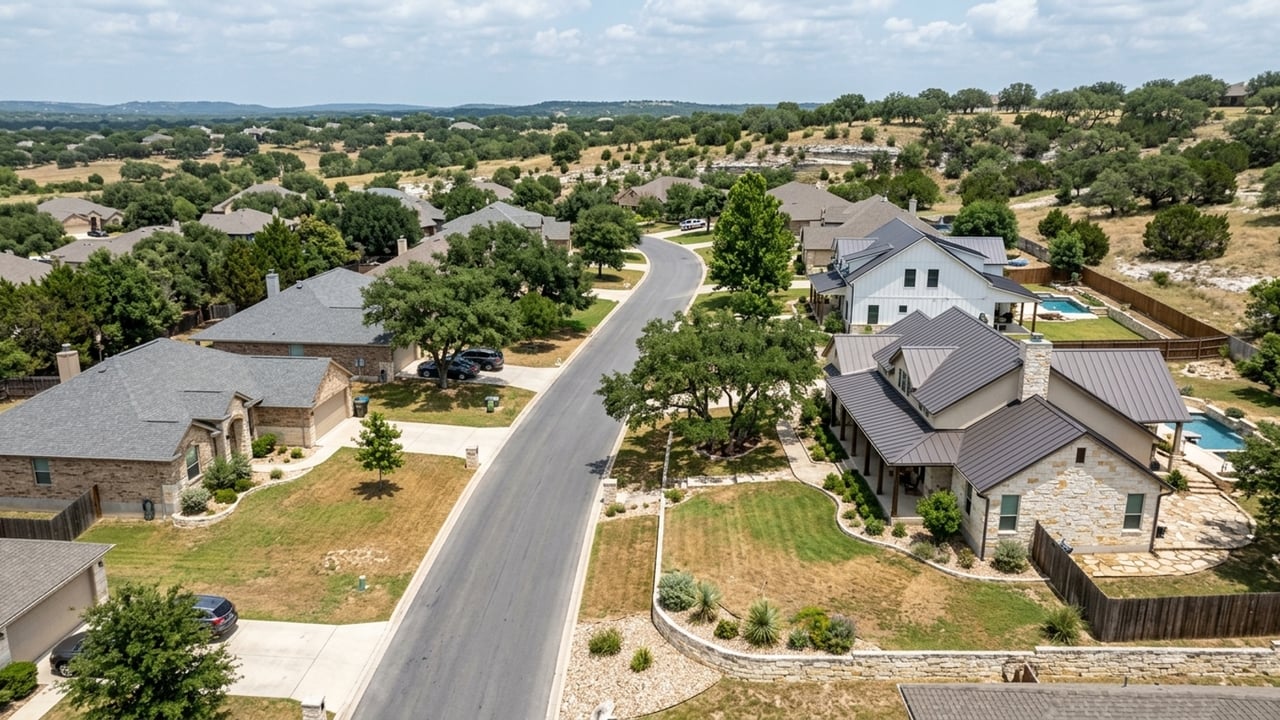
The median sale price for a home in Boerne, TX, recently hit around $505,000, with homes spending roughly 57 days on the market. First-time home buyers in Boerne and local sellers both watch those numbers, but the interest rate environment controls the monthly cost of those homes more than anything else.
A shifting rate environment changes the math for everyone at the table. Buyers face changing payment realities; sellers see shifts in demand based on what those buyers can afford. Knowing how these mechanics work locally helps you make a smarter call about entering the Kendall County housing market.
Understanding Mortgage Rates in Boerne, TX
Mortgage rates are never one static number that applies to everyone equally. Lenders build their offers from a combination of broader economic signals and your specific financial profile - and because those inputs move constantly, any figure you see published online is often stale by the time you read it.
The only way to know your actual borrowing cost is to get a formal offer from a financial institution. Everything else is an approximation.
Where to Find Accurate Rate Quotes Today
Apply directly with a lender and ask for a Loan Estimate. That standard document lays out your exact interest rate, estimated monthly payment, and closing costs based on your actual application - not a national average.
Online aggregators and national news sites report figures that often include purchased discount points, which pull the advertised number down. A same-day quote from a local professional gives you a realistic picture of what you'd pay.
Why Rates Fluctuate Daily
Lenders reprice daily in response to bond market movements - specifically, the yield on 10-year Treasury notes. When inflation data or employment reports shift investor expectations, bond yields move, and mortgage pricing follows right behind.
A quote you get Tuesday morning might look different by Thursday afternoon. Stay in close contact with your loan officer during an active search.
How Rates Affect Your Buying Power in Kendall County
The median sale price in Boerne is approximately $505,000, but most buyers are focused on the monthly payment. Small rate swings drastically change what a buyer pays over the life of a 30-year loan, and the difference is worth understanding before you start writing offers.
Take a $400,000 loan balance as a working example. The monthly principal and interest payment changes meaningfully across even a narrow rate range, which is what the numbers below illustrate.
Comparing Monthly Payments at Different Rates
At a 6% interest rate on a $400,000 loan, the monthly principal and interest payment runs roughly $2,398. Move that rate to 6.5% and the same payment climbs to about $2,528. At 7%, you're looking at $2,661 per month.
That's a difference of $263 a month between 6% and 7% - without the purchase price changing by a single dollar.
Factoring in Kendall County Property Taxes
Principal and interest are only part of what you'll owe each month. Lenders factor local property taxes into your debt-to-income ratio during approval, and in Kendall County those taxes average roughly 1.0% to 1.4%, with homes inside Boerne city limits often landing closer to an effective rate of 1.36%.
A higher interest rate leaves less room in your monthly budget to absorb those tax obligations. The two costs work against you simultaneously.
Balancing Home Price and Interest Costs
If you're firmly capped at, say, a $3,500 total monthly payment, a rate increase means shopping in a lower price bracket to keep that number intact. Some buyers choose a less expensive property to offset a higher rate rather than stretch their budget.
Exploring different neighborhoods or property types in Boerne is a practical way to keep your monthly costs where you need them.
Choosing the Right Loan Type for Your Purchase
The structure of your loan has a direct effect on the rate a lender will offer you. Different products carry different levels of risk for the lender, and that risk gets priced into what you're quoted.
Your long-term plans matter here. A home you expect to keep for five years might call for a completely different financing approach than a place you intend to stay in for decades.
Comparing 30-Year and 15-Year Fixed Loans
The 30-year fixed-rate mortgage is the most common choice because it stretches repayment over three decades, producing the lowest required monthly payment - and the rate stays identical for the entire life of the loan.
A 15-year fixed loan typically carries a lower interest rate than the 30-year option. The monthly payment is higher because you're paying the loan off in half the time, but you'll pay much less total interest over the loan's life.
When an Adjustable-Rate Mortgage Makes Sense
An adjustable-rate mortgage locks in a fixed introductory rate for a set period - usually five, seven, or ten years - then adjusts annually based on broader market conditions. Lenders generally price that introductory period lower than a standard 30-year fixed.
Buyers who plan to sell or refinance before the fixed period ends often use this structure to secure a lower payment in the short term. If that's your plan, it's worth running the numbers carefully with your loan officer.
Conventional, FHA, VA, and USDA Differences
Government-backed loans - FHA, VA, and USDA - often feature lower baseline interest rates than conventional loans because the government insures the lender against default. The catch is that these programs include specific mortgage insurance premiums or funding fees that add to your overall monthly cost.
Compare the total monthly payment of a conventional loan against government-backed options, not just the interest rate in isolation. The headline rate can be misleading.
Ways to Improve Your Mortgage Offer
You can't control the bond market, but you can control your financial profile. Lenders reserve their best pricing for applicants who present the lowest default risk, and a little preparation before you request a pre-approval can make a real difference.
Small improvements in your financial standing often translate to thousands of dollars saved over the life of the loan.
Improving Your Credit Score
Your credit score is the primary metric lenders use to set your rate. Borrowers with scores in the mid-700s and above typically receive the most competitive offers available on any given day.
Paying down credit card balances and correcting errors on your credit report can move that number. Don't open new credit lines or make large purchases on credit in the months leading up to a purchase - both can drag your score down at exactly the wrong moment.
Down Payments and Buying Points
A larger down payment reduces the lender's risk, which often produces a better rate. Putting down 20% or more on a conventional loan also eliminates private mortgage insurance, which is a real monthly savings.
You also have the option to pay upfront fees - discount points - to permanently lower your rate. One point costs 1% of the total loan amount and reduces the rate by a fraction of a percentage point. Whether that makes sense depends on how long you plan to hold the loan.
Comparing Multiple Lenders
Different institutions have different overhead costs, profit margins, and risk appetites. Two lenders can quote you meaningfully different rates on the same day for the same Boerne property.
Apply with at least three lenders and compare their Loan Estimates side by side. That's how you find the best combination of rate and closing costs - not by assuming the first quote is competitive.
Securing Your Offer with a Rate Lock
A rate lock is a lender's guarantee to honor a specific interest rate for a set period, usually 30 to 60 days. It protects you if market conditions worsen while your purchase is under contract.
Buyers typically request a lock once they have an accepted offer. If closing gets delayed beyond the lock period, you may have to pay a fee to extend the protection - so keep an eye on your timeline.
Selecting a Local Mortgage Lender
The lender you choose affects your rate, your closing costs, and whether your transaction closes on time. Real estate is local, and the financing process works better when the professionals involved understand the Kendall County market specifically.
You have dozens of options, from online-only platforms to neighborhood banks to mortgage brokers. Knowing the differences matters before you commit.
Local Lenders Versus National Call Centers
A local Boerne loan officer knows local property tax rates, neighborhood HOA structures, and regional appraisal timelines. They also have a reputation to protect in this community, which tends to produce better communication when something needs to get resolved quickly.
National call centers operate across time zones and routinely hand your file between departments. If an issue surfaces two days before closing, getting a live answer from a dedicated professional beats navigating an 800-number phone tree.
Questions to Ask Your Loan Officer
Ask about their average closing timeline and whether they handle underwriting in-house. In-house underwriting typically means faster decisions and fewer last-minute surprises.
Ask how they communicate outside standard business hours. Real estate negotiations happen on evenings and weekends, and you need a lender who can update a pre-approval letter on a Saturday afternoon when it counts.
Understanding Different Lender Types
Retail banks and credit unions lend their own money and offer a set portfolio of loan products. If you already have a relationship with a local credit union, they may offer relationship discounts on closing costs - worth asking about.
Mortgage brokers don't lend their own funds; they shop your application across dozens of wholesale lenders to find the best terms. Direct lenders specialize exclusively in mortgages, fund loans themselves, and then sell them on the secondary market.
What Rate Trends Mean for Boerne Sellers
Sellers in Boerne need a clear picture of how the financing environment affects the pool of buyers who can afford their home. At a median sale price of around $505,000, buyers are sensitive to monthly payment changes - and that sensitivity shows up directly in days on market and offer activity.
Adapting your strategy to current financing realities tends to produce faster sales and smoother transactions.
Shifts in Buyer Demand
When borrowing costs rise, some buyers pause their search or shift focus to lower price points. That contributes to the kind of market where homes sit longer - which, right now in Boerne, means roughly 57 days on average.
When rates trend down, buyer demand surges. More foot traffic at open houses, a higher likelihood of multiple offers. Sellers feel that shift quickly.
Pricing Your Home for the Current Market
Accurate pricing is the most effective tool you have when borrowing costs are elevated. Overpricing in a high-rate environment tends to leave a home sitting, which usually ends in a price reduction anyway - a worse outcome than pricing it right from the start.
Pull comparable sales from the last 30 to 60 days, not data from six months ago. A local agent can help you read those numbers and position your home competitively on day one.
Common Questions About Mortgage Rates in Boerne
What are mortgage rates today in Boerne, TX?
Mortgage rates change daily and vary based on your personal financial profile. To get an accurate number for today, you need to request a direct quote or Loan Estimate from a lender based on your credit score and down payment.
Should I wait for rates to drop before buying a home in Boerne?
Timing the market is unpredictable. Buyers should focus on whether they can comfortably afford the monthly payment on a Boerne home right now, rather than waiting for future rate changes that may not happen.
How much does a 1% difference in your mortgage rate cost on a typical Boerne home?
On a $400,000 loan balance, a 1% increase from 6% to 7% adds about $263 to the monthly principal and interest payment. Over the life of a 30-year loan, that single percentage point results in tens of thousands of dollars in additional interest.
How do I get the best mortgage rate as a buyer in Boerne?
You can secure a better rate by improving your credit score, saving for a larger down payment, and minimizing your existing debt. You should also apply with at least three different lenders to compare their offers side by side.
How do I choose a mortgage lender in Boerne, TX?
Look for a local professional who understands Kendall County property taxes and has a track record of closing on time. Ask potential loan officers about their communication availability on weekends and whether they handle their underwriting in-house.
How do current mortgage rate trends affect my options if I am selling a house in Boerne?
Higher rates generally reduce buyer purchasing power, which can increase the time it takes to sell a home - currently averaging around 57 days on the market in Boerne. Sellers should price their homes accurately based on recent comparable sales to attract buyers dealing with higher monthly costs.
Getting Local Real Estate Guidance in Boerne
Buying or selling a home means coordinating a lot of moving parts at once. Talking to a local real estate agent before you start filling out loan applications gives you a clearer read on broader market dynamics in Kendall County - and helps you avoid some avoidable missteps early in the process.
A good agent can also point you toward reliable local lenders with proven track records of closing deals in Boerne. Reach out to discuss your goals and get connected with the right people to get started.
