Austin has a well-documented reputation for being one of the most compelling cities in America to move to. It also has a growing reputation for being one of the hardest cities in Texas to stay in. The combination of a cost of living that climbed 50% in five years, traffic congestion ranked among the fifteen worst in the country, and a pace of growth that has strained the civic infrastructure people moved there to enjoy has produced a steady outmigration of families, professionals, and remote workers who want to remain in Texas but want a different version of it.
A significant number of those families end up in Boerne.
The move from Austin to Boerne is not a compromise. It is a recalibration. What you give up is real and worth naming honestly. What you gain is also real, and for a specific kind of family at a specific stage of life, it represents a meaningful upgrade in nearly every dimension that daily life is actually measured by.
This post covers both sides of that equation with the specificity that a decision of this size deserves.
What Austin Has Become in 2026
Understanding the move from Austin to Boerne requires understanding what Austin actually is in 2026, not what it was when most of its current residents decided to move there.
Austin’s median home price reached $525,000 in 2026, representing a 50% increase from 2019 levels even as annual appreciation has slowed to approximately 1.5%. The city that attracted families with the promise of Texas affordability relative to California and the Pacific Northwest is now more expensive than most mid-tier American metros on a housing cost basis.
Traffic has deteriorated in parallel with population growth. Austin commuters now spend an average of 28 minutes getting to work one way, up 2.9% from the prior year, and the metro logged four hours and fifty minutes of weekday congestion in 2025, a 22.4% increase year over year. During peak hours, a drive that takes 15 minutes in free-flow conditions regularly stretches past 28 minutes on major corridors including I-35 and MoPac. Residents in outer suburbs like Georgetown and Cedar Park routinely face 45 to 80-minute commutes to central Austin employment during peak hours.
The reasons most people give for leaving Austin are not complicated. Cost of living is the primary driver. Traffic is the daily friction point that converts cost frustration into action. And the character of the city, which drew people to it in the first place, has been diluted by the scale of growth in ways that long-term residents describe with a specific, recognizable resignation.
None of this makes Austin a bad city. It makes it a different city than it was, and for families who are evaluating what the next chapter of their lives looks like, that difference matters.
Why are people leaving Austin, TX in 2026?
The primary reasons people are leaving Austin in 2026 are cost of living, traffic congestion, and a sense that the city’s character has changed under the pressure of rapid growth. Austin’s median home price reached $525,000 in 2026, a 50% increase from 2019. Average commute times have risen to 28 minutes one way, with outer suburb residents regularly experiencing 45 to 80-minute peak-hour drives. Most documented outmigration from Austin involves moves to smaller Texas cities and Hill Country communities rather than departures from Texas entirely.
The Direct Comparison: What Changes When You Move to Boerne
Housing costs and what your money buys.
Austin housing costs are 24.5% more expensive than Boerne housing costs, according to direct city cost of living comparisons. Austin’s median home price of $525,000 buys a mid-tier suburban home in a standard neighborhood. In Boerne, that same $525,000 buys a well-appointed home in a master-planned community with Hill Country views, significantly more square footage, and in many cases a pool and covered outdoor living space that would add $200,000 or more to the price in any Austin neighborhood.
At the $800,000 to $1.2 million price point where many Austin families who have accumulated equity over the past five years are shopping, the comparison shifts even more dramatically. A $1 million budget in Boerne reaches Cordillera Ranch, Anaqua Springs Ranch, or the luxury sections of Fair Oaks Ranch. The same budget in Austin reaches a well-located home in a desirable neighborhood without acreage, without Hill Country views, and without the amenity infrastructure that the Boerne luxury communities provide.
The traffic reality.
Boerne’s relationship with traffic is categorically different from Austin’s. The drive from Boerne to downtown San Antonio runs 30 to 40 minutes on Interstate 10, primarily highway miles with none of the corridor-specific congestion that defines Austin’s peak-hour experience. The drive from Boerne to the San Antonio Medical Center, La Cantera, UTSA, and the city’s primary employment corridors is 25 to 35 minutes under normal conditions.
For remote workers and those with flexible schedules, the San Antonio commute is often genuinely optional rather than a daily obligation. The Hill Country terrain that frames the I-10 drive northwest of San Antonio bears no resemblance to the stop-and-go congestion of I-35 or MoPac during Austin’s peak hours. Families who have made the move from Austin consistently describe the absence of daily traffic friction as one of the most immediate and tangible quality-of-life improvements they experienced.
Cost of living beyond housing.
Austin is 8.9% more expensive than Boerne on an overall cost of living basis. The gap is most pronounced in housing, where Austin costs run 24.5% higher, but it extends across transportation, healthcare, and general living expenses. For a family spending $8,000 per month in Austin, the equivalent lifestyle in Boerne costs approximately $7,300, a savings of approximately $8,400 per year before any housing cost difference is factored in.
Is Boerne, TX cheaper than Austin?
Yes. Boerne is approximately 8.9% less expensive than Austin on an overall cost of living basis, with housing costs running 24.5% lower. Austin’s median home price of $525,000 buys significantly less in terms of square footage, lot size, and amenity quality than an equivalent budget in Boerne. For families who have accumulated meaningful equity in an Austin home, the move to Boerne frequently produces either a complete elimination of a mortgage or a significantly reduced monthly housing cost at a higher property quality level.
What You Actually Give Up
An honest guide covers this clearly, because the families who make this move with realistic expectations consistently report higher satisfaction than those who arrive without a clear picture of the trade-offs.
Austin’s urban energy does not transfer to Boerne. The restaurant density, the live music infrastructure, the cultural institutions, the tech industry social scene, and the sheer variety of urban experience that Austin offers are not replicated in a town of Boerne’s size. Boerne has excellent dining, a genuine downtown, and a cultural identity that residents love, but it is a small Hill Country town, and families who derive significant daily satisfaction from urban density will feel the difference.
Austin-based employment requires a real commute. Remote workers and those who have relocated their work to San Antonio will not feel this. Families with a partner who works in downtown Austin, at a tech campus in Round Rock, or at a Domain-area employer will face a 90-minute to two-hour round-trip commute that is manageable for some families and genuinely limiting for others. That calculation deserves an honest conversation before the move rather than after it.
The social and professional network rebuilds from scratch. Austin has a deep, established professional community that took years to build. Boerne has a genuinely warm, welcoming community, but it is a different community, and the process of rebuilding professional and social relationships in a new town is real work that takes time.
What Gets Meaningfully Better
The school situation.
Boerne ISD’s A-rating from the Texas Education Agency, maintained every year since the state’s accountability system began, is a distinction shared by only 31 of more than 1,200 Texas school districts. Austin ISD, by contrast, has faced ongoing challenges with school performance, rezoning disputes, and administrative instability that have driven many Austin families toward private schools at significant additional cost. Families who are paying private school tuition in Austin frequently discover that Boerne ISD’s public school quality eliminates that cost entirely while delivering an academic environment that competes directly with the private options they were paying for.
Space and the physical environment.
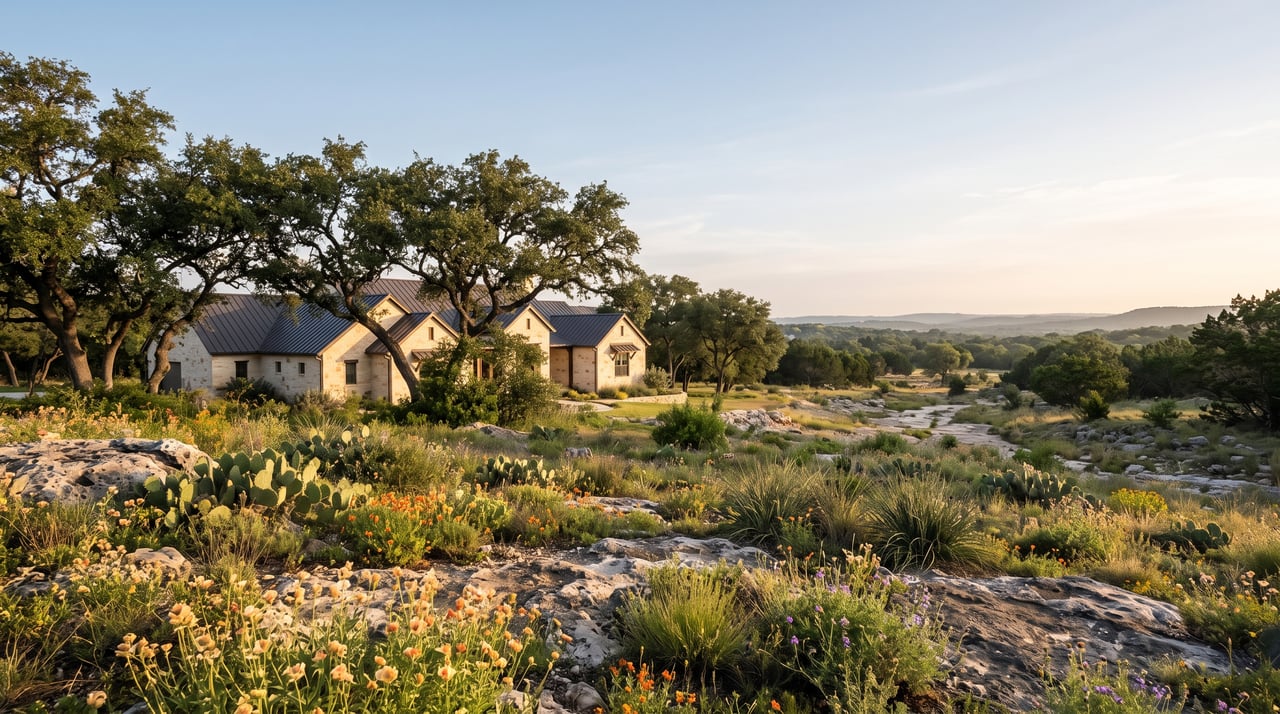
The Texas Hill Country is a genuinely beautiful place to live in a way that most of Austin’s residential fabric is not. The limestone terrain, the live oak canopy, the rolling views, and the Guadalupe River corridor provide a physical environment that changes the texture of daily life in ways that are difficult to quantify but consistently reported by families who make the move. Children grow up outdoors in Boerne in a different way than they do in an Austin suburb. Neighborhoods like Cordillera Ranch and Fair Oaks Ranch are built around the landscape rather than despite it.
Community at a human scale.
Boerne has approximately 22,000 residents. It has a Main Street that is locally owned, a school district where teachers know families by name, and a community event culture that is participatory rather than spectated. The Boerne Market Days on Main Street, the Friday Night Lights culture around Boerne ISD athletics, and the neighborhood dynamics in communities like Esperanza and Fair Oaks Ranch produce the kind of community belonging that Austin residents describe having experienced in the city years ago, before the scale of growth changed the social fabric.
The equity conversion opportunity.
For Austin homeowners who purchased before 2020 and have accumulated $400,000 to $700,000 or more in equity, the move to Boerne offers a specific financial opportunity that goes beyond simple cost comparison. Deploying that equity into a Boerne luxury property in Cordillera Ranch or Fair Oaks Ranch at a significantly lower price-per-square-foot frequently produces a complete elimination of the mortgage, a property of higher quality and greater architectural distinction than what the Austin equity would have purchased in Austin, and a monthly cost structure that allows families to redirect the former housing cost toward other financial priorities.
What is it like moving from Austin to Boerne, TX?
Families who move from Austin to Boerne consistently describe the transition as trading urban density and professional network depth for significantly better housing value, lower daily friction, top-rated public schools, genuine Hill Country landscape, and a community character that Austin’s rapid growth has diminished. The adjustment is real and the trade-offs are specific, but for families at the stage of life where schools, space, community, and a slower daily pace align with their priorities, the move to Boerne is almost universally described as the right decision in retrospect.
The Profile of the Austin-to-Boerne Family
Not every Austin family is the right fit for Boerne, and the families who make the move successfully tend to share a recognizable set of characteristics.
They are typically in their late 30s to early 50s with school-age children and a clear interest in the quality and stability of the school environment. They are remote workers, business owners, or professionals whose work is either location-independent or based in San Antonio rather than Austin. They have accumulated meaningful home equity in Austin and want to deploy it into a higher-quality property at a lower monthly cost. They value outdoor access, a community where they know their neighbors, and a daily pace that gives them more time than their Austin lifestyle was delivering.
For that family, Boerne is not a lesser version of Austin. It is a different answer to the question of how to live well in Texas, and it is one that an increasing number of Austin families are choosing with deliberate intention rather than reluctant compromise.
FAQs: Moving From Austin to Boerne, TX
How far is Boerne, TX from Austin?
Boerne is approximately 80 miles southwest of Austin via Interstate 35 South to Interstate 10 West, a drive that typically runs 75 to 90 minutes under normal conditions. For families with Austin-based employment commitments, this distance represents a meaningful commute rather than a practical daily drive. Most families who make the Austin-to-Boerne move are either remote workers, transitioning their professional base to San Antonio, or accepting the commute as a periodic rather than daily reality.
Is Boerne a good place to live if you work in Austin?
Boerne is a practical choice for families where one or both partners work remotely, are transitioning to San Antonio-based employment, or have flexible schedules that allow for a periodic rather than daily Austin commute. The 80-mile distance between Boerne and central Austin makes a daily round-trip commute demanding enough that most families who make this move have already addressed their Austin employment connection before or shortly after relocating.
How do Boerne schools compare to Austin ISD?
Boerne ISD holds a top A-rating from the Texas Education Agency every year since the state accountability system began, a distinction shared by only 31 of more than 1,200 Texas school districts. Austin ISD has faced performance variability, rezoning challenges, and administrative instability that have driven many families toward costly private school alternatives. Families relocating from Austin who were paying private school tuition frequently find that Boerne ISD’s public school quality eliminates that cost entirely.
What do Austin families most commonly say after moving to Boerne?
The most consistent themes reported by Austin families who have made the move to Boerne are relief from daily traffic friction, appreciation for the Hill Country physical environment, positive surprise at the depth and warmth of the community, satisfaction with Boerne ISD’s school quality, and a sense that the pace of daily life aligns better with what they actually want than what Austin was delivering at its current scale and cost.
What is the housing market like in Boerne compared to Austin in 2026?
Austin housing costs run approximately 24.5% higher than Boerne on a comparable property basis. Austin’s median home price of $525,000 buys a standard suburban home with limited lot size and no Hill Country views. In Boerne, the same budget reaches a well-appointed home in a master-planned community with significantly more space and outdoor living infrastructure. At the $800,000 to $1.5 million price point, the quality gap widens considerably, with Boerne delivering custom limestone estates on acreage in communities like Cordillera Ranch and Anaqua Springs Ranch at prices that have no equivalent in Austin’s residential market.
The decision to leave Austin is not one most families make quickly. The city built something real, and leaving it carries a genuine emotional weight that no purely financial calculation fully captures. What the families who have made the Austin-to-Boerne move consistently report, however, is that the life they built in Boerne is the one they were trying to build in Austin before the growth made it impossible to sustain.
If you are evaluating that move and want to understand what Boerne and Fair Oaks Ranch would look like for your specific family, budget, and timeline, that conversation is worth having with someone who knows every community in this market.
Contact Alexis Weigand Real Estate. Call 210.987.8801.
Curious how much your house could sell for? Check HERE. It takes 30 seconds.
Read what others have said about us HERE.
