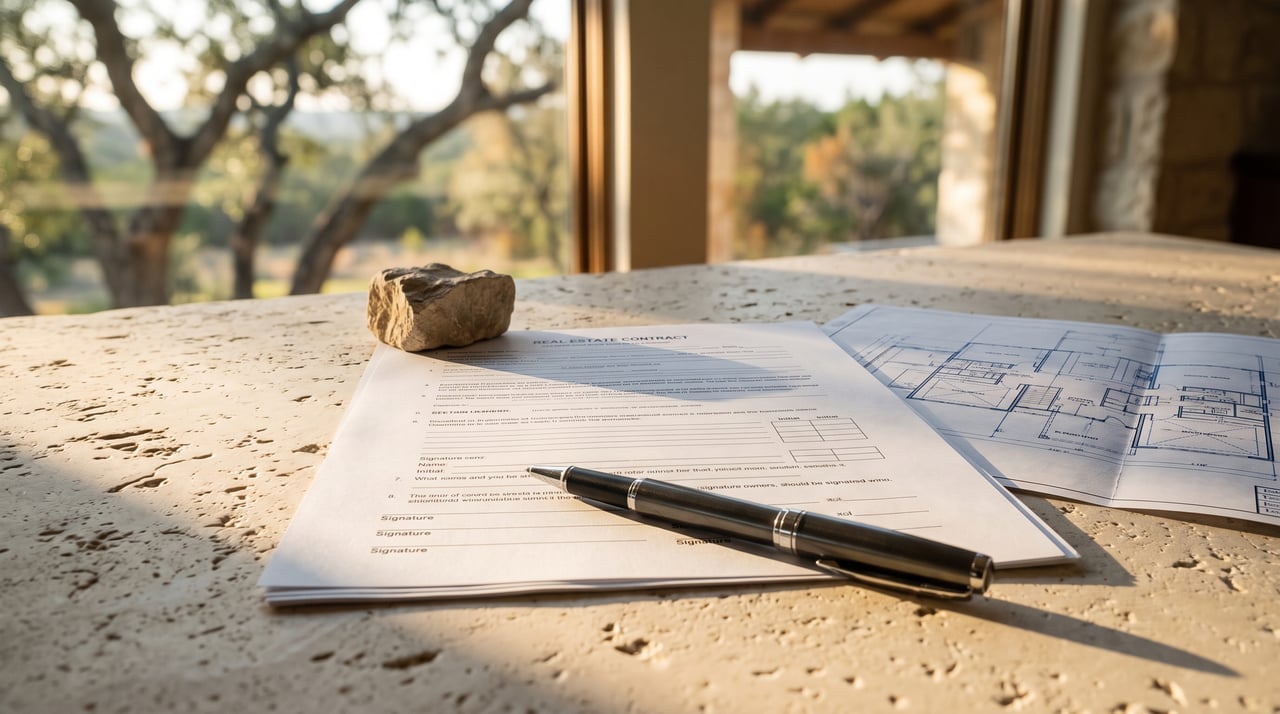
Getting a signed contract on your home feels like the finish line. In reality, it is closer to the halfway point. The period between an accepted offer and a closed transaction is where a significant number of deals unravel, and the San Antonio metro, which includes the broader Boerne market, has one of the highest contract cancellation rates of any major market in the country.
According to Redfin data, more than one in five home-purchase agreements in San Antonio were canceled in January 2026, the highest cancellation rate among the 47 major U.S. metros analyzed. By April 2026 that figure had moderated slightly to 18.9%, still the second highest in the country. Texas contract law plays a contributing role: the standard Texas residential purchase contract gives buyers an unrestricted right to terminate during the option period for a relatively low termination fee, with no obligation to justify the decision.
That legal structure, combined with a market where inventory has risen and serious prospects have more choices than they did two years ago, means that contract-to-close is a more fragile phase of the transaction than many Boerne sellers expect when they accept an offer. Understanding where deals break down, and what a strategically prepared seller can do to prevent each failure point, is one of the most practical things any homeowner planning to sell can know before they list.
Why the Boerne Market Deserves Specific Attention
The broader San Antonio cancellation data matters as context, but the Boerne luxury market above $700,000 has its own distinct set of failure points that differ meaningfully from the general residential market.
Financing structures at this price point are more complex. Most financed purchases above $832,750, the 2026 conforming loan limit for the San Antonio metro, require jumbo loans, which carry stricter qualification standards, higher reserve requirements, and in many cases mandatory appraisal review by the lender’s own appraiser in addition to the standard appraisal. Deals that would close smoothly on conventional financing can stall or collapse entirely at the jumbo tier when a buyer’s financial profile shifts between pre-approval and closing.
Inspection findings at the luxury level tend to be more extensive simply because the homes are larger and more complex, with more systems, more custom construction details, and in older Hill Country custom homes, more deferred maintenance items that a standard production home would not carry. And the thin comparable sale environment that makes pricing difficult in the Boerne luxury segment also makes appraisals harder, which creates appraisal gap risk even on correctly priced homes.
None of these are reasons to avoid selling. They are reasons to enter the contract-to-close phase with a clear understanding of where the pressure points are and a plan for each one.
Reason One: Financing Falls Apart After the Option Period
Financing failure is consistently cited as the single most common reason a home sale collapses nationally, and in the Boerne luxury market it carries additional complexity that the standard statistics do not fully capture.
A pre-approval letter is not a loan commitment. It is a lender’s assessment of a buyer’s qualifying profile based on information provided at a single point in time. Between the date of pre-approval and the closing date, a buyer’s financial profile can shift in ways that invalidate that assessment: a job change, a large purchase that increases debt-to-income ratio, a credit inquiry that affects the score, or a change in lender guidelines triggered by market conditions.
At the jumbo tier, which covers most financed purchases in the Cordillera Ranch and Anaqua Springs Ranch price range, reserve requirements are significantly higher than on conventional loans. Many jumbo programs require six to twelve months of mortgage payments held in verified liquid reserves after closing costs and down payment are accounted for. A buyer who meets the income and credit qualifications but has deployed most of their liquid assets into the down payment may fail the reserve test at the final underwriting stage even when their income fully supports the payment.
How sellers prevent this: Request proof of pre-approval from a lender who has reviewed the buyer’s full financial documentation, not a pre-qualification based on self-reported information. For financed offers above $832,750, ask specifically whether the buyer has been pre-approved for a jumbo product and whether the lender has reviewed reserve documentation. A listing agent with deep Boerne luxury market experience can evaluate the strength of a financing letter and ask the right follow-up questions before the option period expires.
What is the most common reason a home sale falls through in Texas?
Financing failure is the most common reason a home sale falls through in Texas and nationally. In the Boerne luxury market, this risk is heightened by the prevalence of jumbo loan products above the $832,750 conforming loan limit, which carry stricter qualification standards, higher reserve requirements, and mandatory appraisal review. Sellers can reduce this risk by requiring pre-approval documentation reviewed by an experienced local listing agent before the option period expires.
Reason Two: Inspection Findings That Neither Party Handles Well
A home inspection does not fail a transaction. The way both parties respond to inspection findings either closes the deal or kills it. That distinction matters because it places a meaningful amount of control in the hands of the seller, which is where it belongs.
In the Boerne luxury market, inspections on custom Hill Country homes routinely surface findings that standard production-built homes would not produce. Wood-framed structures built into limestone terrain can show foundation movement over time that an inspector will flag even when the movement is within normal tolerances. Custom HVAC systems with multiple zones in large homes produce more inspection comments than a standard single-unit system. Pools, outdoor kitchens, septic systems on acreage properties, well systems, and complex exterior features like outdoor fire features and automated irrigation all generate inspection findings that add up to a report that can alarm a prospect who was not expecting the volume.
Most experienced luxury home inspectors in the Boerne area will note deferred maintenance, code updates that were not required at the time of construction, and cosmetic observations alongside genuinely material findings. Prospects who are represented by a less experienced agent may treat the entire report as equally concerning. That misreading of inspection findings is one of the most common sources of unnecessary contract fallout.
How sellers prevent this: A pre-listing inspection is one of the highest-return investments a Boerne luxury seller can make. Having an independent inspector walk the property before the listing goes live allows the seller to identify and address material findings proactively, document mechanical service records that remove ambiguity, and arrive at the contract stage with known information rather than being surprised by a buyer’s inspector mid-transaction. Sellers who know what their home’s inspection will show negotiate from a position of strength. Sellers who are discovering findings for the first time through a buyer’s inspector are negotiating at a disadvantage, often under time pressure during the option period.
Should I get a pre-listing inspection before selling my home in Boerne?
Yes. A pre-listing inspection is strongly advisable for luxury homes in Boerne and Fair Oaks Ranch. It allows the seller to identify and address material findings before they surface during a buyer’s inspection, eliminate the element of surprise during the option period, and document the home’s condition with confidence. Sellers who have completed a pre-listing inspection and addressed known issues consistently experience less inspection-related negotiation pressure and fewer contract fallouts than those who discover findings for the first time through a buyer’s inspector.
Reason Three: The Appraisal Comes In Below Contract Price
A low appraisal creates what the industry calls an appraisal gap: the difference between what a buyer agreed to pay and what the lender’s appraiser determined the home is worth. Since a lender will not finance more than the appraised value, the gap must be resolved before closing, either through a price reduction, a buyer cash contribution, or a negotiated split between the parties.
In the Boerne luxury market, appraisal gaps are a more persistent risk than in high-volume residential markets for a reason already covered in detail in the AWRE pricing guide: thin comparable data. When a home is priced above $1.2 million in Cordillera Ranch or Anaqua Springs Ranch and the appraiser cannot find three directly comparable recent closed sales, they work with what is available, applying adjustments for differences in lot size, finish level, view, and amenity package. Those adjustments are inherently imprecise, and a conservative appraiser working with limited data may arrive at a value below the contract price even when the seller’s pricing was defensible.
Jumbo lenders add a layer of complexity that conventional loans do not carry. Many jumbo programs require a desk review or field review of the appraiser’s report by a second appraiser employed by the lender. If that review appraiser finds the initial appraisal unsupportable, the deal can stall at a late stage while the parties attempt to resolve a valuation dispute with the clock running.
How sellers prevent this: The most effective defense against appraisal gap risk is accurate pricing from the first day of the listing. A home that is priced at a value the market and the data can support gives an appraiser a foundation to work from. A home that is priced aspirationally above what the comparable evidence can justify creates appraisal gap risk by design. Sellers should also ask their listing agent to prepare a thorough property value package that documents unique value drivers, recent community sales data, and any off-market transactions that support the pricing, which can be shared with the appraiser at the time of the appraisal visit.
What happens when a home appraises below the contract price in Boerne?
When a home appraises below the contract price in Boerne, the lender will not finance more than the appraised value, creating a gap that must be resolved before closing. Resolution options include the buyer contributing additional cash to cover the gap, the seller reducing the price to meet the appraised value, or a negotiated split where both parties absorb part of the difference. Sellers can reduce appraisal gap risk by ensuring accurate pricing from the start of the listing and preparing a documented property value package that supports the contract price with comparable data and unique value driver evidence.
Reason Four: Title Issues That Surface Late in the Transaction
Title problems are less common than financing or inspection failures, but they are disproportionately disruptive when they do appear because they tend to emerge late in the closing timeline and cannot simply be negotiated away. A title defect must be resolved before a clear title can be transferred, and resolution timelines are rarely within the seller’s control.
In the Boerne and Fair Oaks Ranch market, the most common title issues involve unpaid liens from contractors or subcontractors involved in prior construction or renovation, estate-related ownership disputes on inherited properties, boundary discrepancies on acreage lots where survey records and current fence lines do not align, and easement issues on Hill Country properties where utility or access easements were not properly documented in prior transactions.
Acreage properties in Kendall County and the Bexar-Kendall County border area carry additional survey complexity. A 5-acre lot in the estate sections of Fair Oaks Ranch or Cordillera Ranch that has changed hands multiple times may carry survey discrepancies that did not generate any practical problems during prior ownership but become material when a title company conducts a current survey and lender review.
How sellers prevent this: Order a preliminary title report before listing, particularly on properties that are inherited, recently renovated, or located on acreage. Identifying title issues before a contract is signed allows the seller to resolve them on their own timeline rather than under the pressure of a closing deadline. A title company familiar with Kendall County records and Hill Country acreage transactions can move through this process efficiently.
Can a title issue prevent a home sale from closing in Texas?
Yes. A title defect, including an unpaid lien, an estate ownership dispute, an unresolved boundary discrepancy, or an undocumented easement, can delay or prevent a home sale from closing until the issue is resolved. In Texas, a lender will not fund a loan and a title company will not issue title insurance on a property with a known unresolved title defect. Sellers of acreage properties, inherited properties, or recently renovated homes in the Boerne and Fair Oaks Ranch area should order a preliminary title report before listing to identify and resolve any issues proactively.
Reason Five: The Option Period Exit
Texas contract law gives every buyer a right to terminate the contract for any reason during the option period, typically three to ten days, for the cost of the option fee. That fee, which usually runs between $100 and $500 on a standard residential transaction and may be higher on luxury properties by negotiation, is the only cost a buyer incurs when walking away during the option period regardless of the stated reason.
In the current Boerne market, where inventory has risen and prospects have more choices, the option period exit is used more frequently than it was during the tighter market conditions of 2021 and 2022. Common triggers include inspection findings that the buyer characterizes as material but that could reasonably be addressed through a credit, a competing property that became available during the option period, financing pre-approval concerns that surfaced after the contract was signed, or straightforward buyer hesitation that was not visible during the offer stage.
The option period exit is the one contract fallout scenario that no amount of pre-listing preparation fully eliminates. What preparation does accomplish is reducing the number of legitimate reasons a prospect can point to when deciding whether to exercise that right.
How sellers prevent this: The most effective combination is a correctly priced home, a strong pre-listing inspection with known issues addressed or disclosed, a thorough property condition disclosure that removes ambiguity, and a listing agent who maintains active communication with the buyer’s agent throughout the option period to address concerns as they arise rather than discovering at day eight that the buyer has been quietly building a case for termination.
What is the option period in a Texas home sale and can a buyer really walk away?
Yes. The Texas residential purchase contract includes an option period, typically three to ten days, during which the buyer has an unrestricted right to terminate the contract for any reason by paying the option fee, which is negotiated as part of the initial contract. This right to terminate requires no justification. Sellers cannot prevent a buyer from exercising it. The most effective strategy for reducing option period exits is reducing the number of legitimate concerns a prospect can cite: accurate pricing, a pre-listing inspection, proactive disclosure, and active agent communication throughout the option period.
Reason Six: Communication Breakdowns Between Closing Date and Funding
A smaller but consistent category of failed transactions involves deals that have survived financing, inspection, appraisal, and title review and then break down in the final days before closing due to communication failures, timeline disputes, or last-minute document issues.
Common late-stage breakdowns in the Boerne luxury market include jumbo loan document conditions that are requested by the lender within 72 hours of closing and require information the buyer has not assembled, wire transfer delays that push funding past the agreed closing date, walk-through findings that reveal condition changes since the inspection, and HOA document delivery delays on properties in communities like Cordillera Ranch or Esperanza where the resale certificate process requires advance coordination.
How sellers prevent this: Choose a title company with demonstrated experience in Kendall County luxury transactions and HOA resale certificate processing. Confirm the closing timeline with the buyer’s lender at least ten days before the scheduled closing date. Ensure the property is maintained in the same condition from the date of the inspection through the final walk-through. A listing agent who stays actively engaged through the final closing steps rather than stepping back after the option period expires is the single most effective resource a seller has in this phase.
FAQs: Home Sales Falling Through in Boerne, TX
How often do home sales fall through in the San Antonio and Boerne area?
According to Redfin data, approximately 18 to 21% of home-purchase agreements in the San Antonio metro were canceled in early 2026, the highest rate among major U.S. metros analyzed. The Boerne luxury market operates within this broader environment, with the additional complexity of jumbo loan financing, thin appraisal comparable data, and the Texas option period exit right contributing to a higher contract fallout risk than sellers in most other markets face.
What can I do as a seller to prevent my home sale from falling through in Boerne?
The most effective combination is accurate pricing supported by a documented comparable analysis, a pre-listing inspection with known issues addressed or disclosed proactively, a verified jumbo pre-approval on financed offers above $832,750, a preliminary title report ordered before listing on acreage or inherited properties, and a listing agent who maintains active communication through the option period and all the way to funding. Sellers who address the primary failure points before they become contract issues close successfully at a meaningfully higher rate than those who rely on luck after a contract is signed.
Can a buyer in Texas walk away from a home purchase for any reason?
Yes, during the option period. The standard Texas residential purchase contract gives buyers an unrestricted right to terminate for any reason during the negotiated option period by paying the option fee. After the option period expires, the buyer can still terminate under specific contingencies written into the contract, including financing and appraisal contingencies, but doing so outside of those provisions typically results in forfeiture of the earnest money deposit.
What is an appraisal gap and how does it affect home sales in Boerne?
An appraisal gap is the difference between the contract price and the appraised value of the property. When a lender’s appraiser values the home below the agreed sale price, the lender will not finance the difference, creating a gap that must be resolved through price reduction, buyer cash contribution, or a negotiated split. In the Boerne luxury market, appraisal gaps are more common than in high-volume markets because thin comparable data at the luxury price point makes it harder for appraisers to support pricing with direct evidence.
How does the Texas option period work and how long does it last?
The Texas option period is a negotiated timeframe, typically three to ten days, written into the purchase contract during which the buyer pays an option fee for the unrestricted right to terminate the agreement. The option fee amount and duration are negotiable. Once the option period expires, the buyer loses the unrestricted termination right and the transaction moves toward closing under the contingencies remaining in the contract. Option period length and fee are often negotiation points in the Boerne luxury market, where sellers can reasonably request shorter option periods and higher option fees on well-prepared, correctly priced homes.
A signed contract is a significant milestone. Getting from that milestone to a funded close requires the same level of preparation and strategic management that the listing phase demands. The sellers who close consistently at their target price are the ones who treat the contract-to-close phase as seriously as everything that came before it.
If you are preparing to sell a home in Boerne or Fair Oaks Ranch and want to understand how to structure your transaction for the highest probability of a clean close, contact Alexis Weigand Real Estate. Call 210.987.8801.
Curious how much your house could sell for? Check HERE. It takes 30 seconds.
Read what others have said about us HERE.
