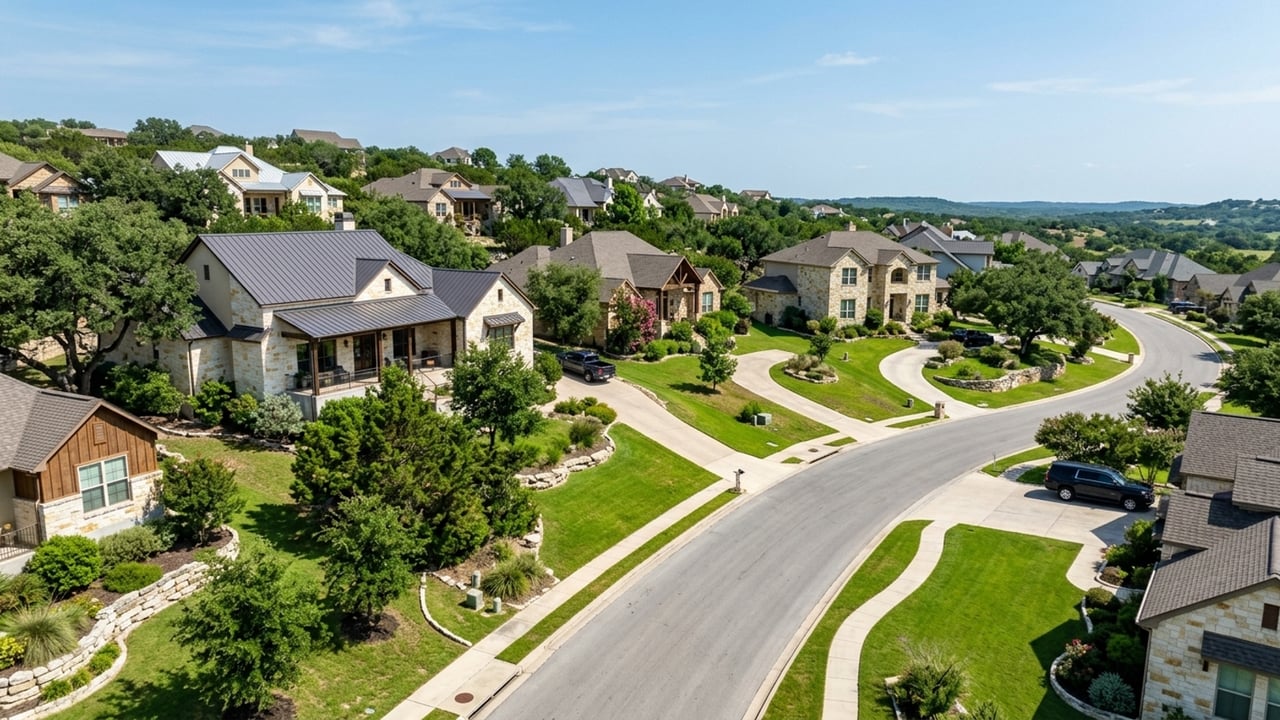
Living in Boerne, TX places you at an elevation of 1,447 feet in the Texas Hill Country, about 30 minutes northwest of downtown San Antonio. That position on the Edwards Plateau gives the city a climate profile that's meaningfully different from coastal or northern parts of the state.
Buyers looking at homes in Kendall County ask me about the weather more than you'd think. And it's a fair question - knowing what to expect from the local highs, lows, and rainfall patterns helps you plan a move and figure out what it actually costs to maintain a property here.
Boerne's Climate at a Glance
The city carries a humid subtropical climate, officially classified as Cfa under the Köppen-Geiger system. That translates to hot summers and generally mild winters, with precipitation spread fairly evenly across the calendar.
The elevation matters more than most buyers realize. Even within the broader San Antonio-New Braunfels Metropolitan Statistical Area, Boerne tends to feel a bit different than the lower-lying communities nearby. That local geography shapes everything from daily humidity levels to which plants actually survive in your yard.
The Local Climate Zone
Humid subtropical doesn't mean Gulf Coast-level saturation. The air holds moisture, but it doesn't cling to you the way it does at lower elevations closer to the water. Humidity peaks in spring - May averages run around 71% to 75%.
By late summer, things dry out noticeably. August humidity drops to around 61%, which takes a little of the edge off the heat for outdoor work and home maintenance.
Seasonal Conditions: Spring, Summer, Fall, and Winter
Spring is when things move fast here - temperatures climb quickly and you're dealing with the highest humidity of the year. It's a popular season for property tours, but don't let a clear morning fool you. Sudden rain showers are part of the deal.
Fall is the other side of that coin. By late October and November, the humidity backs off and temperatures settle into genuinely comfortable territory. It's no coincidence that a lot of people schedule their moving trucks and inspections in autumn.
Summer and Winter Extremes
Summer is not subtle. High temperatures push into the mid-90s to over 100°F by August, and your air conditioning is going to run hard. Homes with energy-efficient windows genuinely earn their asking price here - buyers notice, and they should.
Winter is a different story. January highs hover near 59°F to 62°F, with overnight lows dipping into the upper 30s or low 40s. You'll run the heat, but prolonged deep freezes are uncommon. It's nothing like what buyers relocating from the north are used to.
Average Monthly Temperatures
Month by month, Boerne follows a steady curve from mild winters up through a scorching summer peak and back down. Buyers planning a relocation often use these averages to figure out when to book movers and when to line up contractors.
January is the coldest month. August is the hottest. April and October tend to offer the most livable daytime temperatures - usually sitting somewhere in the 70s and 80s - which is exactly why those months stay busy for showings.
The Hottest and Coldest Months
In August, the average high lands at 94°F to 95°F, and overnight lows only pull back to about 71°F. The record high on file hit 110.6°F in September 2000, so the extreme end of the range is not theoretical.
January daytime highs reach the low-to-mid 60s. The record low for the area dropped to 2.2°F in December 1989. Typical winter nights rarely fall far below freezing, but that 1989 number is worth keeping in mind when you're looking at exposed pipes or pool equipment.
Rainfall, Snow, and Humidity Levels
Kendall County averages about 34 inches of rainfall annually. That sits slightly below the national average of 37 inches, but it's enough to support the area's native oak trees and grasses without much supplemental irrigation in most years.
The city sees about 76 days of measurable precipitation each year. Snow is rare - roughly one inch annually on average - so if you own a snow blower, you can leave it behind.
Annual Precipitation Totals
The 34 inches doesn't arrive as steady, gentle drizzle. It tends to show up in brief, heavy bursts. That distinction matters when you're looking at a property, because those downpours will stress the drainage around your foundation fast.
When you're touring homes here, take a close look at the lot grading. Water should be moving away from the house, not pooling against it. The annual total is moderate; the intensity of individual storms is not.
Severe Weather and Natural Hazards
Boerne falls within the Austin/San Antonio National Weather Service forecast area, and that zone sees real weather. Severe thunderstorm warnings can bring large hail and wind gusts up to 50 mph.
Heavy rain events also trigger flash flood warnings, especially in low-lying areas or near creeks. Before you fall in love with a property, check its flood zone status and ask directly about any history of water pooling on the lot.
Tornadoes and Storms
Isolated tornadoes can develop during storm-mode transitions. They're less common here than in the northern parts of the state, but they do happen. Most homeowners here treat it as a routine matter - secure the patio furniture, make sure the roof is rated for high winds, and move on.
The summer heat itself is the hazard that catches people off guard. A failing HVAC system in August isn't an inconvenience, it's a health issue. Any home you're seriously considering deserves a close look at the age and condition of the air conditioning.
The Best Times to Visit or Relocate
If you have any flexibility on timing, spring or fall is the right call. March, April, October, and November give you moderate temperatures that make moving day survivable rather than miserable.
Summer showings require a strategy. A lot of agents here schedule them for early morning or late evening to keep everyone comfortable. It also happens to be the best time to see how the home's cooling actually performs under pressure.
Comparing the Region
Boerne's elevation of 1,447 feet provides some genuine relief from the heavier, more stagnant heat you'd find closer to the Gulf Coast. The lower late-summer humidity makes a real difference compared to eastern Texas - it's the same state, but it doesn't feel like it.
Buyers arriving from northern climates usually find the winters here a welcome adjustment. The trade-off is a long summer and learning how to manage a property through drought cycles. That's not a reason to hesitate; it's just the reality you're budgeting for.
How Weather Impacts the Boerne Housing Market
Climate shapes what buyers here actually want. Mature shade trees, covered patios, and energy-efficient building materials get noticed in a way they wouldn't in a milder market. Climate-controlled storage gets attention too - summer heat is hard on anything temperature-sensitive.
If you factor the weather into your search criteria up front, you avoid paying for upgrades after closing.
Current Market Conditions
The median home price in Boerne sits at roughly $499,890, with homes spending an average of 65 days on the market. There are about 132 available listings to choose from right now.
Homes are selling at about 98% of list price - a balanced environment where there's room to negotiate without the desperation moves you see in hotter markets. Touring during the summer months has one underrated upside: you'll get an honest read on how well the cooling system holds up when it's actually being tested.
Frequently Asked Questions
How do the extreme heat and drought cycles in Boerne affect home foundations?
Prolonged dry periods during the summer, when temperatures reach the mid-90s, can cause soil to shrink and pull away from foundations. Homeowners should run soaker hoses around the perimeter to maintain consistent soil moisture.
Do I need special flood or hail insurance when buying a house in Boerne, TX?
Standard homeowner policies often cover hail damage from severe thunderstorms, but flood insurance is typically a separate policy. Buyers should check the specific flood zone status of the property, as the area is subject to flash flood warnings from heavy rain events.
What is the best time of year to list a home in Boerne based on local weather trends?
Spring and fall are optimal times to list a property. The moderate temperatures and peaking humidity in May make outdoor viewings more comfortable than during the intense August heat.
Are certain neighborhoods in Boerne more susceptible to Hill Country flash flooding?
Low-lying areas and properties situated near local creeks face higher exposure to flash flood warnings. Buyers should review the lot grading and historical water pooling data for any home they consider in Kendall County.
What specific weatherproofing features should buyers look for when touring Boerne properties?
Buyers should look for energy-efficient windows and well-maintained HVAC systems to handle August highs of 94°F to 95°F. Proper lot drainage and clear gutters are also important for managing the 34 inches of annual rainfall.
How do Boerne's occasional winter freezes impact residential plumbing and pool maintenance?
While January average lows stay in the upper 30s to low 40s, historical extremes have dropped much lower, such as the 2.2°F record in 1989. Homeowners should insulate exposed pipes and winterize pool equipment to prevent damage during sudden temperature drops.
